
The Supreme Court has ruled that borrowers are not entitled to a personal hearing before banks classify their loan accounts as "fraud" under RBI directions, clarifying that a written response to a show-cause notice and access to the forensic audit report (with redactions) are sufficient for natural justice.

The Supreme Court of India has expressed concern over the continued prevalence of domestic abuse and crimes against women, highlighting that these issues are symptomatic of a deeper societal problem rooted in patriarchy, despite economic and legal advancements.

The Supreme Court of India has granted bail to Kashmiri separatist leader Shabir Ahmed Shah, who has been in jail for over eight years in a terror funding case, citing the unlikelihood of a timely trial conclusion and the curtailment of personal liberty.
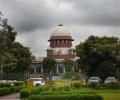
The Supreme Court has ruled that the Bar Council of India (BCI) lacks the statutory authority to regulate the conduct of law students. The court clarified that disciplinary actions against students fall under the purview of their respective educational institutions, setting aside BCI notifications issued during a controversy involving NALSAR University students.

'It is unfortunate that the Chairman of Tata Sons, a Company renowned for setting high standards of corporate governance, is contending reappointment on such an untenable interpretation of the Articles'.

'Unfortunately, the judges chose not to address the issue of whether Hindutva is an appeal to religion.' 'From the moment the judgment is delivered, it is the law of the land.'

A US appeals court has upheld a $562.5 million arbitral award, which has grown to over $2 billion with interest, in favour of Devas Multimedia against Antrix Corporation, the commercial arm of ISRO, ruling that US courts have jurisdiction despite Antrix being government-owned.

Congress-ruled states, including Karnataka, Kerala, and Telangana, are preparing to challenge the Mines and Minerals (Development and Regulation) Amendment Act, 2026, in the Supreme Court. They allege the new law undermines states' rights by restricting their powers to levy taxes on mineral resources, a claim the Centre denies, stating it aims for uniform mineral rates.
The Supreme Court will consider the Centre's plea for clarification on the applicability of its March 11 judgement regarding OBC creamy-layer criteria for the Civil Services Examination (CSE) 2025. The government highlights practical difficulties and potential unequal treatment of candidates if the ruling is applied retrospectively, as the CSE 2025 selection process concluded before the verdict. The Department of Personnel and Training (DoPT) seeks to proceed with service allocation based on the pre-March 11 criteria to avoid disruption to training schedules and ensure fairness for candidates.

'My argument was straightforward: If the Constitution allows this reservation and SC/ST and OBC candidates are already getting reservation in private institutions -- backed by Constitution Bench orders -- then not extending the same to EWS candidates directly violates the 103rd Amendment and Article 14, which guarantees the right to equality.'
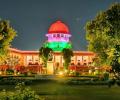
The Supreme Court has dismissed a Public Interest Litigation challenging the constitutional validity of the 2018 amendment to the Scheduled Castes and Scheduled Tribes (Prevention of Atrocities) Act. The amendment had restored restrictions on anticipatory bail and removed requirements for preliminary inquiry and prior approval before arrest. The court cited its 2020 verdict which had already upheld these amended provisions, rejecting arguments about potential misuse and "reverse discrimination."

The Delhi High Court has refused to grant bail to Olympian Sushil Kumar in the alleged murder case of former junior national wrestling champion Sagar Dhankar. The court cited concerns over influencing witnesses, the gravity of the offence, and Kumar's conduct, echoing reasons previously given by the Supreme Court when it cancelled his earlier bail.
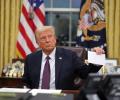
The US Supreme Court has struck down an executive order by President Donald Trump that sought to restrict birthright citizenship. The ruling reaffirms that the 14th Amendment guarantees citizenship to all persons born on American soil, including children of undocumented or temporarily present parents. This decision overturns a key policy initiative from Trump's second term.

Solicitor General Tushar Mehta informed the Supreme Court that an appeal would be filed against an Allahabad High Court decision that quashed the detention of Delhi University student Akriti Chaudhary under the National Security Act. The High Court had also awarded Rs 5 lakh compensation to Chaudhary and criticised the "despotic" conduct of the Gautam Buddha Nagar DM. The Supreme Court also expressed displeasure over a Greater Noida executive magistrate's notice to another student for protest participation.

The Supreme Court has permitted Muslims to offer Friday prayers at a site adjacent to the Bhojshala-Kamal Maula complex in Dhar, Madhya Pradesh, following a High Court ruling that declared the complex a temple. This decision allowed prayers to resume after a previous ASI order was quashed.

Google has challenged a Delhi High Court single-judge bench ruling that held it liable for trademark infringement by allowing competitors to bid on and use the 'Hindware' trademark as keywords in its Google Ads programme. Google argues that keyword bidding promotes competition and is a globally accepted norm, citing previous rulings that allowed the practice. The tech giant contends that the Trade Marks Act does not distinguish between coined and generic words for such infringements.

The Supreme Court has quashed all FIRs registered against students who protested the NEET-UG paper leak, calling it a "major victory" for dissent. The court also noted the government's commitment to formulate a pan-India compensation policy within three months for families of students who died by suicide due to the crisis. The CJP, which led the protests, welcomed the decision but vowed to monitor the policy's implementation.

Heavy police and drone teams have been deployed in Haldwani's Banbhoolpura area ahead of an anticipated Supreme Court verdict concerning alleged encroachment on 29 hectares of Railway land. The deployment is a precautionary measure given past unrest during demolition drives, with authorities appealing for peace and warning against rumour-mongering.
The Supreme Court has agreed to hear a plea seeking to deny retirement perks and benefits to constitutional functionaries, including judges, who resign to avoid removal proceedings. The petition argues that such a practice undermines the Rule of Law and constitutional principles.

The Bombay High Court has dismissed Congress MP Rahul Gandhi's petition challenging a 2019 summons issued by a magistrate court in a defamation complaint. The complaint, filed by a BJP member, pertains to Gandhi's alleged defamatory comments against Prime Minister Narendra Modi. The High Court found no illegality in the magistrate's order but extended the deferment of the lower court hearing by six weeks to allow Gandhi to appeal to the Supreme Court.
The Supreme Court has stated it will wait for the central government's response on petitions concerning the criminalisation of marital rape before scheduling a hearing. This comes as the Centre has yet to file a substantive reply on the matter, which challenges the constitutional validity of exceptions in criminal law that protect husbands from prosecution for sexual acts with their wives. The issue involves the interpretation of Section 375 of the IPC (now replaced by Bhartiya Nyaya Sanhita) and has seen split verdicts in high courts.

The Chhattisgarh High Court has nullified a divorce order issued by a private Sharia body, stating that religious institutions cannot assume the authority of a court or use religious belief to determine an individual's legal rights. The ruling reinforces the supremacy of the constitutional framework and the rule of law over extra-judicial forums.
The Supreme Court has declined to entertain a plea seeking directions for states to enforce anti-slaughter laws for cows and their progeny. The petitioner's counsel withdrew the plea after the bench expressed reluctance, advising them to pursue other legal remedies, such as contempt petitions for non-implementation of previous rulings.

Supreme Court Justice Sandeep Mehta has sent a fourth letter to CJI Surya Kant, reiterating and expanding allegations against Rajasthan High Court judge Sanjeev Prakash Sharma, accusing him of judicial interference, breaching confidentiality, and administrative abuse, further deepening a significant judicial controversy.

The Supreme Court has allowed the Muslim community to offer Friday prayers at a dargah adjacent to the disputed Bhojshala complex in Dhar, Madhya Pradesh, between 1 pm and 3 pm. This directive comes after the Muslim side alleged non-compliance with a previous order for an alternative prayer site, and follows a Madhya Pradesh High Court ruling declaring the complex a temple.

The Supreme Court has given actor Rajpal Yadav a final two-week opportunity to present a concrete proposal for repaying an outstanding amount to a private firm, directing him to deposit Rs 2 crore with the apex court registry. This comes after a series of cheque bounce cases, with the Delhi High Court previously upholding his conviction and sentencing him to three months' imprisonment. The court noted Yadav's past conduct did not inspire confidence but granted a last chance.
The Supreme Court has asked the CBSE to consider deferring the implementation of its three-language policy for Class 6 students, which mandates two native Indian languages, until the academic session starting 2027. The CBSE stated it would consider the suggestion. The policy, aligned with NEP-2020, makes two native Indian languages compulsory for Class 6 and Class 9, with provisions for foreign languages as additional options and no board exams for the third language in Class 10.
The Supreme Court on Wednesday quashed the Delhi High court judgment decriminalise homosexual acts among consenting adults in private.
The Supreme Court has ruled that an investigating agency must seek a magistrate's approval for re-arresting an individual if they were previously released due to a breach of constitutional rights, such as not being informed of arrest grounds or being detained beyond 24 hours. This judgment reinforces the importance of Articles 22(1) and 22(2) and introduces stricter accountability measures for police officers.

The Supreme Court has rejected a High-Powered Committee's request for a six-month extension to submit its report on the definition and protection of the Aravalli Hills, directing the panel to submit it by November 30. The court warned of reconstituting the committee if it fails to meet the deadline and emphasised the need for issue-specific interim reports. This decision follows a previous controversy over the Aravalli definition and mining regulations.

Supreme Court Justice Ujjal Bhuyan critically examined police conduct in India, raising serious concerns about alleged assaults on protesters, custodial torture, and the urgent need for comprehensive police reforms to uphold human rights and the rule of law.

A Delhi court has dismissed the bail applications of activists Umar Khalid and Sharjeel Imam in the 2020 Delhi riots conspiracy case, citing its obligation to follow a previous Supreme Court order that rejected their bail.

The Supreme Court has dismissed a review petition challenging its earlier decision that no cognisable offence was made out against BJP leaders Anurag Thakur and Parvesh Verma for their alleged hate speeches during the 2020 anti-CAA protests in Delhi.

The Supreme Court has sought a response from the Centre regarding the introduction of totalisers for counting votes recorded in Electronic Voting Machines (EVMs). The court wants to understand any impediments and potential negative impacts of this mechanism, which aims to protect voter privacy and prevent post-poll violence by counting votes from multiple booths together.

The Supreme Court has waived the remaining life sentence of 105-year-old murder convict Rasik Chandra Mondal, allowing him to live as a free man. The decision was made considering his advanced age and health issues, making his interim bail absolute.

The Supreme Court has overturned a 2017 National Green Tribunal (NGT) order that held Sri Sri Ravi Shankar's Art of Living Foundation responsible for environmental damage to the Yamuna floodplains. The court directed the Delhi Development Authority (DDA) to refund the Rs 5 crore environmental compensation deposited by the foundation and continue the floodplains' rehabilitation work.
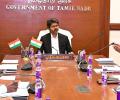
The Tamil Nadu government has appealed to the Supreme Court against a Madras High Court judgment. The High Court ruled that individuals converting to Islam cannot claim reservation under the Backward Class (Muslim) category solely based on conversion, striking down a state Government Order that allowed such benefits.

The Supreme Court has expressed strong displeasure with the Odisha government for delaying a decision on the remission plea of Ravindra Pal alias Dara Singh, who is serving a life sentence for the 1999 murder of Australian missionary Graham Stuart Staines and his two sons. The court has directed the state to make a decision by September 17, warning of summoning officials if the delay persists. Singh, incarcerated for over 26 years, seeks premature release based on his time served and a 2022 state policy.
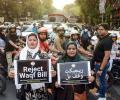
The Congress party announced its intention to challenge the constitutionality of the recently passed Wakf (Amendment) Bill, 2024 in the Supreme Court. AICC general secretary Jairam Ramesh stated that the party will "very soon" file a petition, citing concerns about the bill's impact on constitutional principles. Ramesh highlighted the Congress's ongoing legal challenges against other legislation, including the Citizenship Amendment Act (CAA), amendments to the Right to Information (RTI) Act, and changes to the Conduct of Election Rules. He emphasized the party's commitment to defending the Constitution's principles, provisions, and practices.
'A rigid or overly broad interpretation could lead to a chilling effect on investments and growth in sectors traditionally driven by private initiative.' 'Entrepreneurs may fear that their assets could be arbitrarily appropriated by the State under the guise of serving the 'common good' without sufficient legal safeguards.' 'The judgment thus supports a more nuanced view, one that balances individual property rights with public welfare objectives.'
